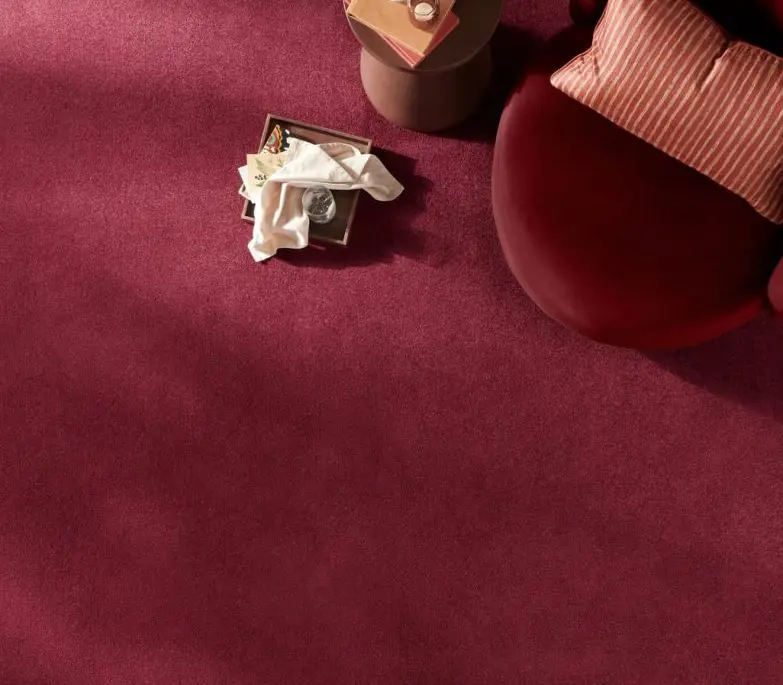
Laying carpet in the bathroom might feel decadent at first, but six months later it’s a stain-riddled cautionary tale.
Some crimes against interior design are forgivable. Novelty Rick & Morty mugs above the window, an Ikea flat-pack wardrobe masquerading as an heirloom in the guest bedroom. We’ve all sinned. But bathroom carpet? That’s not a sin. That’s a criminal offense. It’s essentially a bathmat that’s been nailed down forever, doomed to soak up everything from sloshing bathwater to Uncle David’s midnight emergency.
Step onto it without shoes and it squelches with the same pleasure as drowning in peat. Smell it closely (God help you) and it offers notes of mildew, despair, Febreze and Lynx Africa. Visually, it’s the interior equivalent of a stale Angel Delight. Dated, almost beige with water damage, and faintly offensive. It's not even French. Historically, it’s the worst idea since someone thought wearing feathers meant you could fly from the Eiffel Tower.
And, look, we know that retro is all the rage. It’s why we’re now plumping for physical media over Netflix streaming, and assigning the original Playstation as a collector’s item, but before opting for the ‘cost charm’ of flooring that is, essentially, an Airbnb for bacteria - think twice.
Sexy as the concept may be of stepping from the shower onto the plush sensation of fibres brushing the soles of your feet, you’ve got hygiene, styling and history to consider. And those aspects are rather important should you wish to remain healthy.
Hygiene impact of bathroom carpet
Carpet becomes a petri dish when moisture gets involved. For anything made of absorbent material, bathrooms are typically a festival of human fluids, soap scum and cleaning materials. The very phrase “toilet-adjacent carpet” should make any sane person clutch their pearls, or at the very least yearn for their bio-hazard suit.
Unless you subject the carpet to specialist cleaner every time you step onto that plush shag pile, then you’re essentially sinking barefoot into yesterday’s mistakes. Think about it. The bathroom is a place where water splashes in great quantities, steam lingers, and people undertake natural processes considered too taboo in conversation.
When you add carpet into the equation, you’re not creating a spa retreat. You’re creating a microbial wonderland. We firmly believe that moisture and fabric should never meet. It’s like Romeo and Juliet if Romeo was a puddle of shower water and Juliet was a polyester weave. Baz Luhrmann wouldn’t touch this rendition with a barge pole.
The ending is just as tragic - mildew, mould, and that vaguely sour smell you pretend you can’t detect when guests come round. “Oh, that must be the drains,” you say, knowing full well the drains are innocent. Truth is, it’s your vile carpet plotting to abuse your immune system.
For the guys out there, let’s talk about aim. As age creeps up on us, aim is not a universally mastered art. That carpet around the toilet? That’s not cushioning. That’s a sponge. A sponge that, if subjected to forensic testing, would qualify as a crime scene. CSI would take one look and just shut the whole house down. They may even ask for assistance from Hannibal.
Then there’s those who love to argue that bathroom carpet is washable. To a degree, perhaps, but that doesn’t mean you should be running it through the spin cycle every week to maintain basic hygiene.
Towels and bathmats are designed to be laundered. Carpet is not. You can shampoo it, you can hoover it, but you cannot un-absorb what has been absorbed. That history is stitched into the fibres forever, like a dirty little time capsule of your life and dietary choices.
Styling and aesthetic nightmares
Sleek marble so dense that light bends around it, glistening taps, and then, fluffy wall-to-wall carpet. It’s as if Liberace tried to design a bathroom while blindfolded. And drunk. And under the influence of Columbian marching powder.
To those with even an ounce of self-respect, Carpet in a bathroom broadcasts that your dream interior is an airport lounge from Las Vegas circa 1973. It doesn’t matter if the shade is ‘mushroom taupe’ or ‘seafoam delight’. Once it’s in a bathroom, it instantly downgrades the entire house by at least one social class. It’s like going from Gordon Ramsay’s Le Pressoir d'Argent in Bordeaux to an abandoned Little Chef on the A1 to Peterborough.
Stylistically, bathroom carpet is akin to a greasy mullet. You can spend thousands on designer tiles, chic lighting, and scented candles, but throw in carpet and suddenly it all looks like your auntie Sheila’s bungalow; where the bathroom suite was candy green and the ‘decorative touch’ was a crocheted loo roll cover with googly eyes. Call me snobbish, but that borders on a crime against humanity.
Interior designers worth their salt will tell you that bathrooms are meant to be fresh, crisp, and clean. Hard flooring (tile, stone, even luxury vinyl) gives a sense of permanence and hygiene. Carpet in this context looks not just wrong, but actively offensive. It’s like wearing Ugg boots to the opera; comfortable for you, yes, but an eyesore to everyone else.
Don’t ignore the practical styling fail. Carpet fades. It stains. It bunches. One enthusiastic splash of hair dye and you’re left with a lurid magenta halo around your sink for the rest of eternity. You can’t even cover it with a rug because then you’re just rug-on-carpet, which is design self-harm.
History got this wrong
So how did we get here? How did humankind, capable of splitting the atom, building cathedrals, and inventing delivery pizza, decide that bathroom carpet was a good idea?
Blame the 1960s and 1970s. A decade when taste went on holiday and never sent a postcard. Shag rugs, fondue sets, wallpaper that looked like someone had a psychedelic breakdown. It was the era when people thought “luxury” meant covering every available surface in something synthetic and vaguely flammable.
Bathrooms were no exception. Wall-to-wall carpet, often colour-coordinated with the suite. Lilac loo? Lilac carpet. Peach tub? Peach carpet. It was a world of chromatic sadism where you could drown in matching pastels before you drowned in actual bathwater.
To be fair, the intentions were vaguely sensible. Cold tiles and lino felt unwelcoming, especially in draughty houses. Carpet, on the other hand, felt warm, soft, inviting. People thought they were importing bedroom comfort into their most vulnerable space. Instead, they were importing mould spores and unspeakable stains.
History sometimes just gets things wrong. Like powdered wigs. Or smoking at petrol stations. Or Y2K panic bunkers. Bathroom carpet belongs in that museum of failed ideas as a relic of human optimism colliding head-on with the practical reality of a healthy existence.